
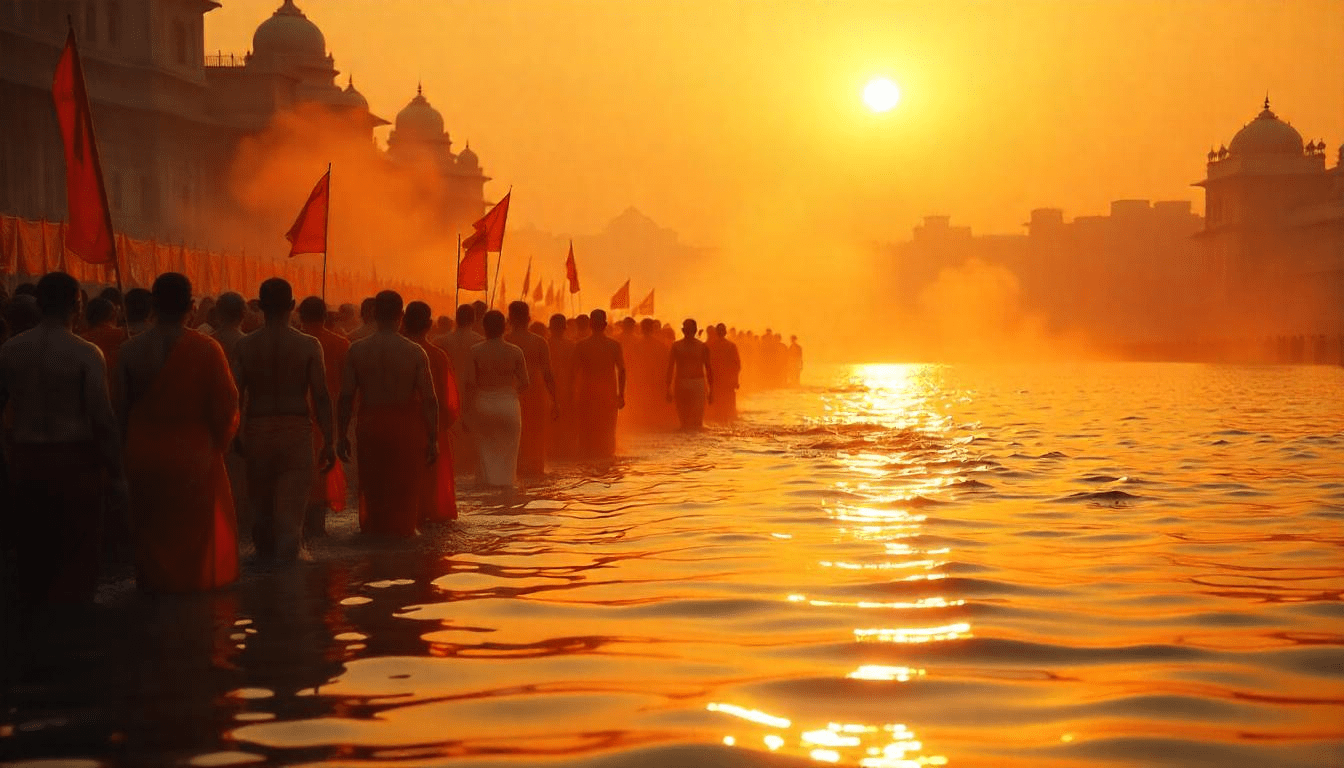
The Kumbh Mela is not just the largest religious gathering on Earth; it is a deeply spiritual experience that transcends time, culture, and geography. Held in India for millennia, the Kumbh Mela draws millions of devotees, saints, and seekers who come together to bathe in sacred rivers and connect with the divine. It is a festival of light, learning, and liberation where the ancient spiritual wisdom of India is brought to life in a magnificent celebration.
Origins of the Kumbh Mela
The term “Kumbh” means “pot,” and “Mela” means “fair” or “gathering.” The origins of the Kumbh Mela India tradition lie in Hindu mythology. According to legend, gods and demons once churned the cosmic ocean (Samudra Manthan) to obtain the nectar of immortality (amrita). During the churning, a pot of nectar emerged, and a celestial battle ensued over its possession. As Lord Vishnu transported the pot, drops of nectar fell at four earthly locations Prayagraj, Haridwar, Ujjain, and Nashik which became the Kumbh Mela locations.
These sacred cities now rotate as hosts for the Kumbh Mela, depending on specific astrological alignments. Each location is imbued with immense spiritual energy, believed to be activated when the planets align in certain positions in relation to the Sun and Jupiter.
Kumbh Mela Frequency and Types
The Kumbh Mela frequency is governed by celestial movements. There are four main types of Kumbh Melas:
- Maha Kumbh Mela (held every 144 years at Prayagraj)
- Purna Kumbh Mela (every 12 years at Prayagraj)
- Ardh Kumbh Mela (every 6 years, also at Prayagraj)
- Kumbh Mela (held every 12 years at the other three locations: Haridwar, Ujjain, and Nashik)
Kumbh Mela 2025, set to take place in Prayagraj, Uttar Pradesh. This is expected to be a Purna Kumbh Mela, attracting devotees from every corner of India and across the globe.
The Sacred Bath: Ritual and Symbolism
The central spiritual act of the Kumbh Mela is the Shahi Snan, or royal bath. On designated auspicious dates, millions take a dip in the holy river be it the Ganges in Haridwar, the Sangam (confluence of the Ganga, Yamuna, and mythical Saraswati) in Prayagraj, the Shipra in Ujjain, or the Godavari in Nashik. This act is believed to cleanse sins, free the soul from the cycle of birth and death (samsara), and aid in spiritual liberation (moksha).
For many, this is not just a symbolic gesture but a deeply transformative experience. The act of immersing oneself in the sacred waters becomes a surrender to the divine, a reconnection with one’s spiritual essence, and a reaffirmation of faith.
Saints, Sadhus, and Spiritual Discourse
One of the most awe-inspiring sights of the Kumbh Mela in India is the gathering of sadhus and spiritual masters from various Hindu sects. Naga sadhus, covered in ash and renouncing all worldly possessions, march in grand processions. Others, like the Vaishnavas, Shaktas, and Shaivites, set up temporary ashrams or camps known as akharas.
These spiritual leaders engage in satsangs (spiritual discourses), yagnas (fire rituals), and personal blessings. For pilgrims, the opportunity to interact with such rare and elevated souls is a powerful incentive to attend. Many undertake the journey solely to seek darshan (spiritual sight) and wisdom from these revered figures.
A Cultural and Human Tapestry
While spirituality lies at the heart of the Kumbh Mela, it also serves as a dynamic cultural mosaic. The temporary city that arises to host the event includes tent accommodations, food stalls, art exhibitions, and performances of devotional music and dance.
What makes the Kumbh Mela extraordinary is the sense of unity in diversity. People from all walks of life rich and poor, rural and urban, scholar and seeker—come together in harmony. Despite the massive crowds, the atmosphere is marked by peace, reverence, and shared purpose.
Spiritual Lessons from the Kumbh Mela
The spiritual significance of the Kumbh Mela extends far beyond ritual. It embodies key principles of Hindu philosophy:
- Unity with the Divine: The bathing ritual reminds devotees of the eternal connection between the soul and the Supreme.
- Detachment and Renunciation: The presence of sadhus and renunciants inspires introspection and a reevaluation of material pursuits.
- Transcendence of Ego: In the sea of millions, individual identities dissolve, fostering humility and universal brotherhood.
- Faith and Discipline: Pilgrims often undergo long, arduous journeys, demonstrating devotion, self-discipline, and endurance.
Kumbh Mela 2025: A Call to the Spirit
The upcoming Kumbh Mela 2025 promises to be one of the most significant spiritual events of the decade. With an expected turnout in the tens of millions, it will be a convergence of ancient wisdom and modern humanity. Organizers have already begun preparations to ensure safety, sanitation, and spiritual sanctity for all who attend.
Whether you’re a devout pilgrim, a spiritual seeker, or someone fascinated by the mysteries of human faith, Kumbh Mela India 2025 offers a once-in-a-lifetime opportunity to witness and participate in a truly divine spectacle.
Final Thoughts
The Kumbh Mela is far more than a festival it’s a living embodiment of humanity’s eternal quest for meaning, truth, and liberation. In an age of increasing disconnection and materialism, events like the Kumbh Mela remind us of the timeless value of inner awakening and shared sacred experience.
If you’ve ever felt the call of the divine, the pull toward something higher than yourself, the Kumbh Mela is a place where that calling is not just heard—but celebrated by millions.
Discover More Wisdom: Exploring Shakti Peethas: Where Divine Feminine Energy Resides
