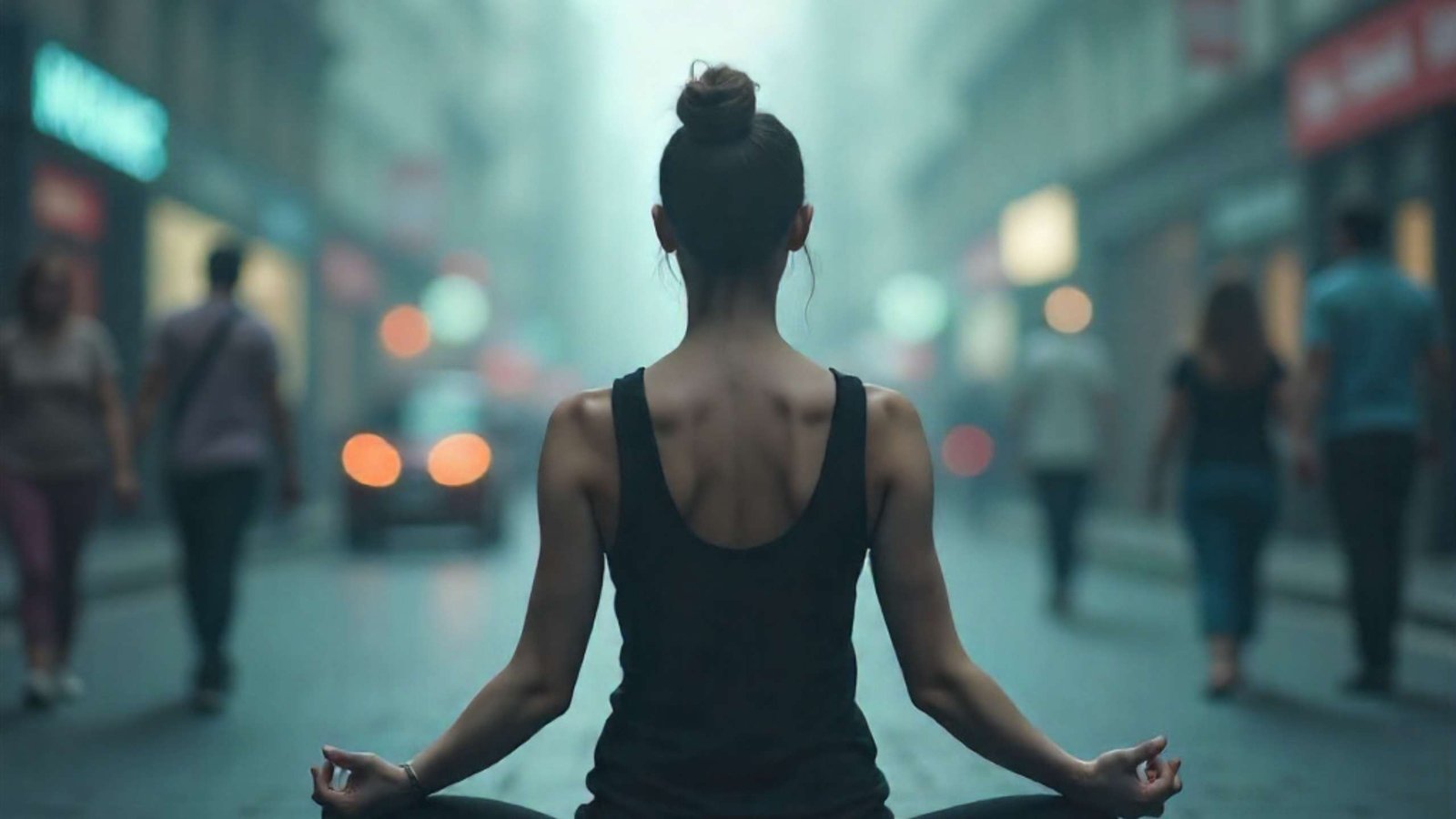
Spiritual slowness is the quiet wisdom that resists modern urgency.
Modern life moves quickly—but the soul does not.
While technology accelerates communication, ambition compresses timelines, and culture rewards immediacy, something within us quietly resists. Not loudly. Not rebelliously. But persistently.
That resistance is not laziness.
It is wisdom asking for space.
Spiritual depth does not grow under pressure. It unfolds through slowness—not the slowness of inefficiency, but the slowness of attentive presence.
This DhyanSeed reflection explores why unhurried time is not a luxury, but a spiritual necessity—and how allowing life to be slow restores meaning, coherence, and inner nourishment.
—
1. Why the Soul Cannot Be Rushed
The soul operates on a different clock.
Insight ripens.
Emotional integration takes cycles.
Wisdom forms through lived digestion, not speed.
You may understand something intellectually in a moment—but embodiment takes time. When life is rushed, experiences pile up faster than they can be integrated. This creates inner congestion: many impressions, little meaning.
Slowness allows experience to settle into understanding.
—
2. Speed Creates Information; Slowness Creates Wisdom
Fast living is efficient at collecting information.
Slow living is necessary for transforming information into wisdom.
When everything moves quickly:
Reflection is postponed
Emotional processing is skipped
Intuition is drowned out
Meaning feels thin
Slowness restores:
Context
Nuance
Inner listening
Depth of response
Wisdom needs room to breathe.
—
3. The Nervous System’s Need for Slowness
Spiritually, slowness is not abstract—it is biological.
The nervous system integrates experience during calm states. Without enough slow moments:
The body remains alert
Emotions stay unresolved
Decisions feel reactive
Rest never feels complete
Slowness signals safety. Safety allows presence. Presence opens the door to depth.
—
4. Why Many People Fear Slowing Down
Slowing down can feel uncomfortable at first.
Why? Because speed often protects us from:
Unprocessed emotions
Unanswered questions
Existential uncertainty
Inner emptiness
When life slows, what was avoided becomes audible.
This is not a flaw of slowness—it is its function.
—
5. Slowness as a Spiritual Discipline
In many traditions, slowness is cultivated deliberately:
Walking meditations
Silent meals
Extended retreats
Simple repetitive practices
These are not meant to escape life, but to re-enter it fully.
Slowness trains attention. Attention restores reverence.
—
6. The Difference Between Slowness and Stagnation
Slowness is often mistaken for stagnation.
But stagnation is frozen energy.
Slowness is moving energy with awareness.
You can live slowly and still be productive, creative, and engaged. The difference is that actions emerge from clarity rather than compulsion.
Slowness aligns effort with meaning.
—
7. How Rushing Fragments the Self
When life is rushed:
The body lags behind the mind
Emotions trail behind decisions
Values are overridden by urgency
This creates fragmentation—a sense of living in pieces.
Slowness allows all layers of the self to arrive together.
—
8. The Quiet Joy of Unhurried Living
Unhurried moments restore subtle joys:
Fully tasting food
Listening without preparing a response
Noticing the body’s signals
Allowing silence without filling it
These are not dramatic pleasures.
They are sustaining ones.
—
9. Choosing Slowness in a Fast World
Choosing slowness is a conscious act.
It may mean:
Fewer commitments
Longer pauses between decisions
Saying no to artificial urgency
Redefining productivity
Slowness is not withdrawal—it is selective engagement.
—
10. Letting Life Unfold at Its Own Pace
Not everything is meant to be accelerated.
Some truths arrive late but last longer.
Some growth cannot be optimized.
Some clarity emerges only after waiting.
Letting life be slow is an act of trust.
—
Closing Reflection
When you stop rushing, something essential returns.
Attention deepens.
Meaning thickens.
Life feels inhabited again.
Slowness is not falling behind.
It is arriving fully.
—
🌿 GUIDED DHYANSEED PRACTICE — Unhurried Presence Ritual (10 minutes)
Step 1 — Settling (3 minutes)
Sit comfortably. Slow the breath.
Affirm inwardly:
“I allow life to slow me.”
—
Step 2 — Sensory Awareness (5 minutes)
Notice sounds, sensations, breath—one at a time.
No multitasking.
No interpretation.
Repeat silently:
“This moment is enough.”
—
Step 3 — Integration (2 minutes)
Place a hand on the heart.
Affirm:
“Depth grows in stillness.”
Ritual complete.
Read more on dhyanseed.com